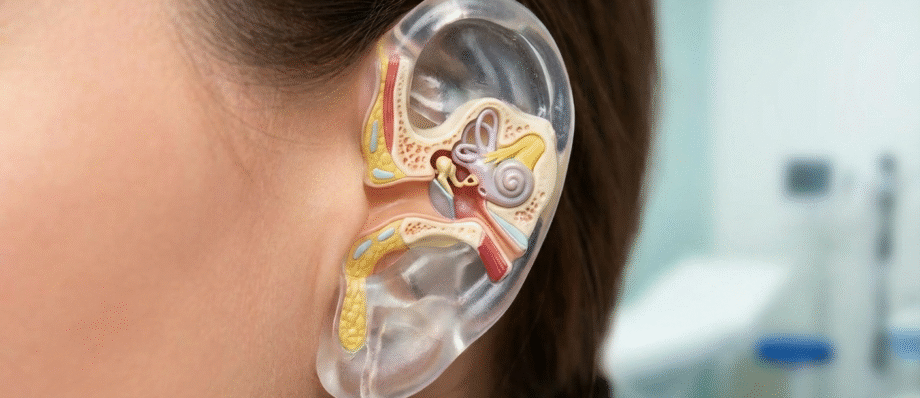
Our ears are more than just organs for hearing—they are essential for balance, communication, and connecting with the world around us. Yet, despite their importance, ear health is often overlooked until problems arise. From minor discomforts like wax buildup to serious issues such as infections, hearing loss, or tinnitus, neglecting your ears can have long-term consequences.
Maintaining healthy ears isn’t just about avoiding pain or hearing loss; it’s about enhancing your quality of life. Good ear care allows you to enjoy conversations, music, and everyday sounds while keeping your balance and overall well-being intact.
In this article, we will explore everything you need to know about ear health: how ears work, common problems, factors that affect them, and practical tips to keep them in optimal condition. Whether you’re looking to prevent damage, treat minor issues, or simply understand your ears better, this guide will provide you with all the knowledge you need to protect and care for your most important auditory organ.
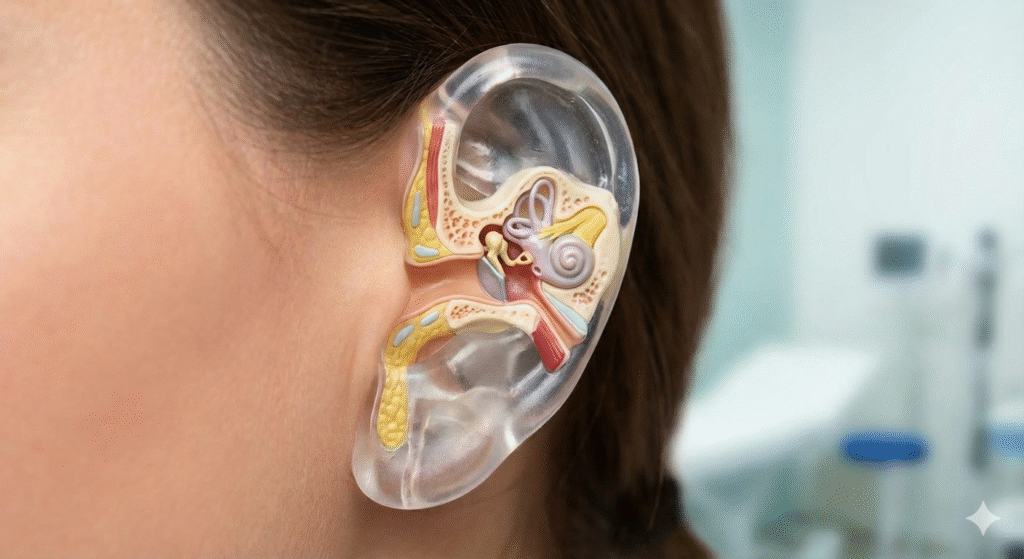
Understanding the Ear: How Our Hearing and Balance Work
The human ear is an extraordinary organ that does much more than just help us hear. It is a sophisticated system designed to capture sound, transmit it to the brain, and help maintain balance. To understand ear health, it’s essential to know the structure of the ear and how each part functions.
The ear has three main parts: outer ear, middle ear, and inner ear, each playing a unique role.
1. Outer Ear
The outer ear includes the pinna—the visible part of the ear—and the ear canal. Its primary function is to capture sound waves from the environment and channel them toward the eardrum. The ear canal also produces earwax (cerumen), which serves as a natural barrier against dust, bacteria, and other foreign particles. Proper earwax balance is important: too little can make the ear more vulnerable to infections, while too much can cause blockages and temporary hearing problems.
2. Middle Ear
Behind the eardrum lies the middle ear, which contains three tiny bones called the ossicles: the malleus, incus, and stapes. These bones amplify sound vibrations and transmit them to the inner ear. The middle ear also contains the Eustachian tube, which connects the ear to the back of the throat. This tube helps regulate air pressure, ensuring the eardrum vibrates correctly. Dysfunction in this area can lead to discomfort, infections, or conditions like barotrauma, often experienced during air travel or diving.
3. Inner Ear
The inner ear houses the cochlea, a spiral-shaped organ that converts sound vibrations into electrical signals, which the brain interprets as sound. It also contains the vestibular system, responsible for maintaining balance and spatial orientation. Damage to the inner ear, whether from loud noise, infection, or aging, can lead to hearing loss, tinnitus, or dizziness.
Understanding the ear’s structure highlights why ear care is so crucial. Even minor injuries, infections, or neglect can affect hearing and balance. Healthy ears rely on protection from loud sounds, proper hygiene, and early intervention at the first sign of trouble.
Common Ear Problems
Many ear issues can occur due to infections, environmental factors, lifestyle choices, or genetics. Here are some common problems:
- Ear Infections
- Otitis externa: Infection of the outer ear canal, often called “swimmer’s ear.”
- Otitis media: Infection of the middle ear, common in children, often following a cold.
- Hearing Loss
- Can be temporary or permanent. Causes include prolonged exposure to loud noises, earwax buildup, infections, and age-related degeneration.
- Tinnitus
- A condition where one hears ringing, buzzing, or hissing in the ears without an external sound source. Often caused by noise exposure, ear infections, or certain medications.
- Earwax Buildup
- Earwax protects the ear canal, but excessive accumulation can block sound and cause discomfort or infections.
- Balance Disorders
- Problems in the inner ear can affect balance, leading to dizziness, vertigo, or motion sickness.
- Barotrauma
- Ear pain or injury caused by sudden pressure changes, such as during air travel or scuba diving.
Factors That Affect Ear Health
Several lifestyle and environmental factors can harm your ears if not managed properly:
- Loud Noise Exposure: Prolonged exposure to music, traffic, machinery, or headphones at high volumes can damage sensitive ear cells.
- Poor Hygiene: Inserting cotton swabs or objects into the ear canal can push wax deeper or damage the eardrum.
- Infections: Sinus infections, colds, or bacterial exposure can spread to the ears.
- Aging: Age-related hearing loss, or presbycusis, affects many older adults.
- Medication Side Effects: Some antibiotics, chemotherapy drugs, or painkillers can affect hearing
Signs You Should Care About Your Ear Health
Be attentive to these warning signs and consult a healthcare professional if they persist:
- Persistent ringing or buzzing in the ears (tinnitus)
- Difficulty hearing conversations or everyday sounds
- Ear pain, discharge, or swelling
- Frequent dizziness or loss of balance
- Feeling of fullness or pressure in the ear
- Itching or irritation inside the ear
Early detection is key to preventing long-term damage.
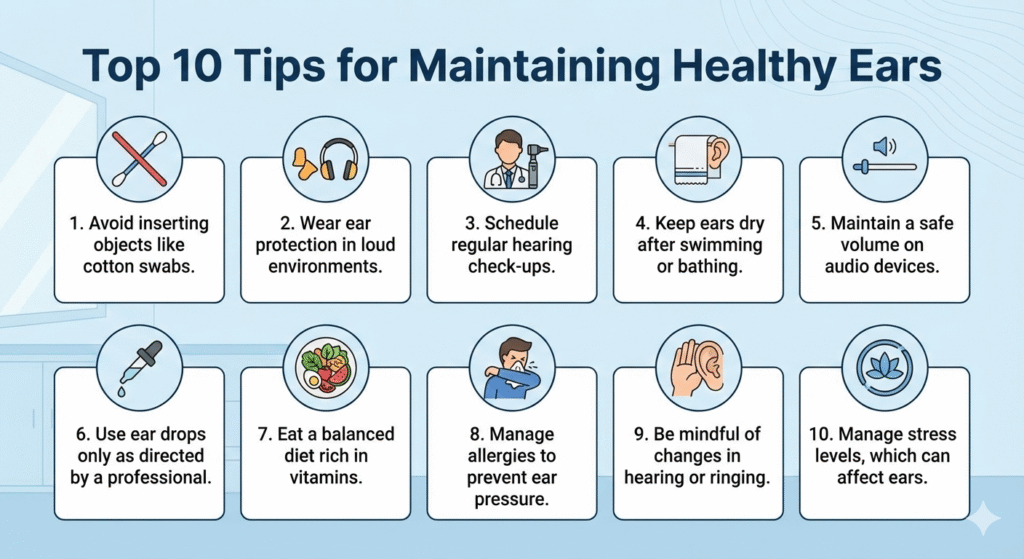
Top 10 Tips for Maintaining Healthy Ears
Healthy ears are essential not just for hearing but also for balance and overall well-being. Protecting them requires daily care and mindful habits. Here are the top 10 tips to maintain strong, healthy ears:
1. Protect Your Ears from Loud Noises
Loud sounds can permanently damage the delicate hair cells in your inner ear.
- Use earplugs or noise-canceling headphones in loud environments like concerts, clubs, or construction sites.
- Follow the 60/60 rule: keep headphone volume below 60% and listen for no longer than 60 minutes.
2. Avoid Inserting Objects into Your Ears
Cotton swabs, hairpins, or any sharp objects can push wax deeper, irritate the ear canal, or puncture the eardrum.
- Clean only the outer ear with a soft cloth.
- For earwax buildup, consult a healthcare professional rather than trying to remove it yourself.
3. Keep Your Ears Dry
Moisture in the ear canal can lead to bacterial or fungal infections.
- Dry your ears gently after swimming or showering by tilting your head.
- Use swimming earplugs if you frequently swim.
4. Avoid Exposure to Smoking and Secondhand Smoke
Toxins in smoke reduce blood flow to the ears and increase the risk of infections, especially in children.
- Avoid smoking and minimize exposure to secondhand smoke.
5. Eat a Balanced Diet
Nutrition affects ear health and hearing.
- Magnesium (spinach, almonds, bananas) protects against noise-induced hearing damage.
- Zinc and Vitamin B12 (eggs, fish, poultry) support nerve health.
- Omega-3 fatty acids (salmon, walnuts) promote circulation in the inner ear.
6. Manage Chronic Health Conditions
Diseases like diabetes, hypertension, and cardiovascular issues can impact ear health.
- Regular checkups, medication adherence, and lifestyle management improve circulation and prevent nerve damage.
7. Treat Ear Infections Promptly
Untreated infections can lead to chronic issues or hearing loss.
- Follow medical instructions for antibiotics or ear drops.
- Avoid inserting anything into the ear during infection.
8. Limit Headphone and Earbud Use
Prolonged use at high volume can damage your hearing over time.
- Take breaks every hour.
- Prefer over-ear headphones to reduce direct pressure on the ear canal.
9. Schedule Regular Hearing Checkups
Early detection is key to preventing long-term hearing problems.
- Adults over 40 should get hearing tested every 2–3 years.
- Children should have routine screenings to catch issues early.
10. Practice Safe Ear Hygiene
Routine ear care prevents infections and discomfort.
- Avoid scratching or digging inside the ear.
- Clean the outer ear gently with a soft cloth.
- Use only doctor-recommended drops or solutions for wax removal.
Conclusion: Take Care of Your Ears Today for a Lifetime of Healthy Hearing
Our ears are incredible organs that do far more than help us hear—they connect us to the world, allow us to enjoy music and conversations, and help us maintain balance. Despite their importance, ear health is often neglected until problems arise. From infections and wax buildup to hearing loss and tinnitus, ear issues can significantly impact our quality of life.
The good news is that most ear problems are preventable with simple habits. Protecting your ears from loud noises, practicing safe cleaning, keeping them dry, eating a nutrient-rich diet, managing health conditions, and scheduling regular checkups can go a long way in preserving hearing and balance. By following the top 10 tips for maintaining healthy ears, you can reduce risks and enjoy a lifetime of clear hearing.
Frequently Asked Questions (FAQ) About Ear Health
1. How often should I clean my ears?
You generally don’t need to clean your ears frequently. The ear canal is self-cleaning, and over-cleaning can push wax deeper. Gently clean only the outer ear with a soft cloth and consult a doctor if you experience wax buildup.
2. Can loud music damage my ears permanently?
Yes. Prolonged exposure to loud music can damage the hair cells in the inner ear, leading to permanent hearing loss or tinnitus. Using earplugs and following the 60/60 rule for headphones can help protect your ears.
3. What are the signs of an ear infection?
Common signs include ear pain, swelling, redness, fluid or pus discharge, fever, or temporary hearing loss. If these occur, it’s important to see a doctor promptly to prevent complications.
4. Is it safe to use cotton swabs in my ears?
No. Inserting cotton swabs can push earwax deeper, irritate the ear canal, or damage the eardrum. Safe alternatives include gentle cleaning of the outer ear and professional earwax removal if needed.
5. When should I get a hearing test?
Adults over 40 should have a hearing check every 2–3 years, while children should have routine screenings. You should also see a professional if you notice ringing in the ears, difficulty hearing, or sudden changes in hearing.